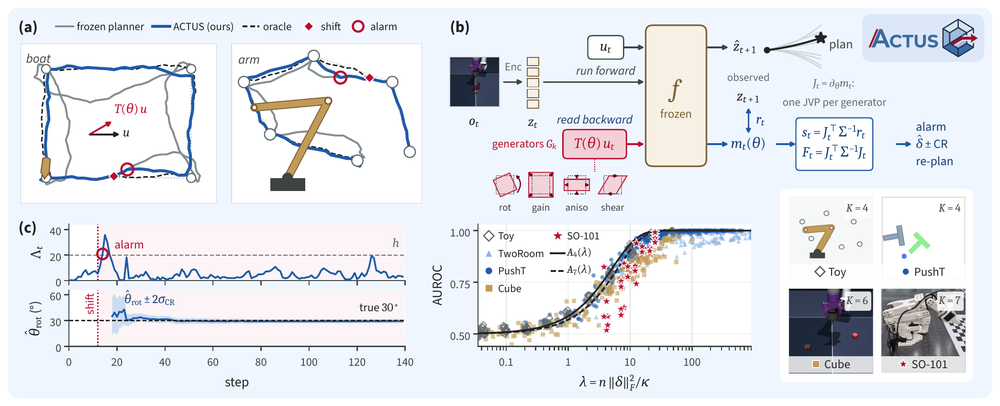
@article{li2026actus,title={How Uncertain Is My Action? Self-Correcting Visual Planning with Frozen World Models},author={Li, Siqing and Yang, Luming and Jiao, Yijia and Deng, Junze and Yilmaz, Alper},journal={arXiv preprint arXiv:2611.23620},year={2026},month=nov,url={https://arxiv.org/abs/2611.23620},}
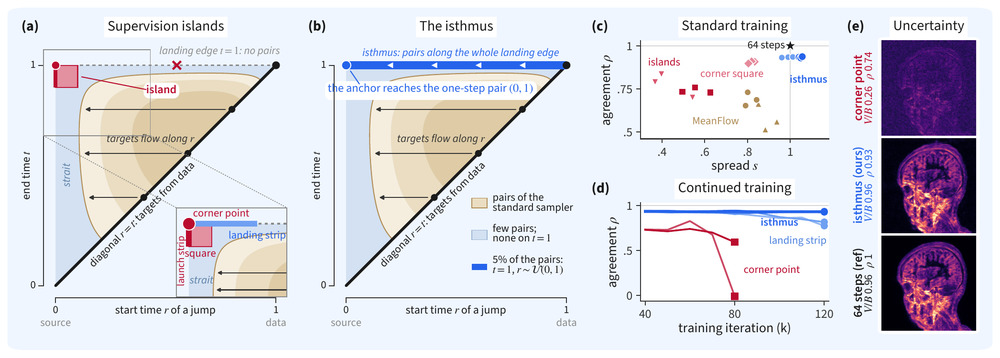
@article{yang2026isthmus,title={Isthmus: Bridging Supervision Islands Restores Uncertainty and Stability in One-Step Flows},author={Yang, Luming and Li, Siqing and Liu, Haoxian and Bu, Zhenyu and Zhu, Jiazheng and Yilmaz, Alper},journal={arXiv preprint arXiv:2611.23616},year={2026},month=nov,url={https://arxiv.org/abs/2611.23616},}
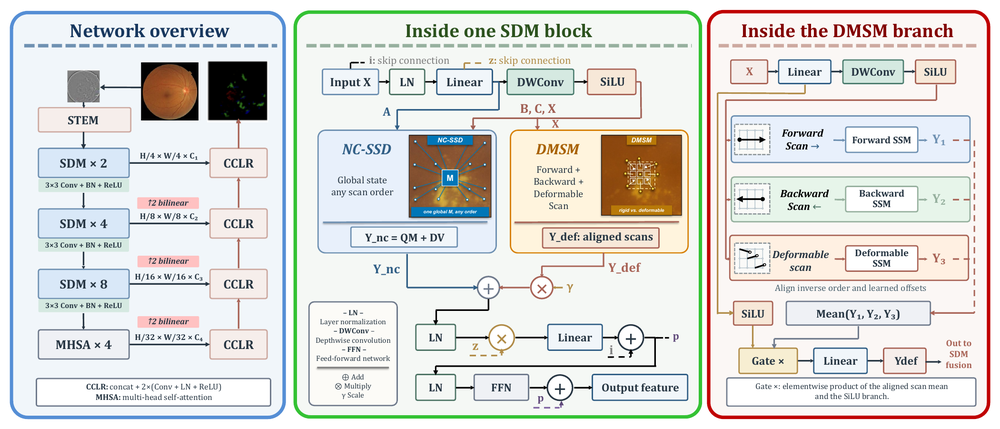
@article{yu2026d2mamba,title={Seeing the Small: Deformable Duality Mamba for Retinal Lesion Segmentation},author={Yu, Chang and Li, Siqing and Liu, Yuanchen and Bu, Zhenyu and Yang, Luming and Yilmaz, Alper},journal={arXiv preprint arXiv:2611.13514},year={2026},month=nov,url={https://arxiv.org/abs/2611.13514},}
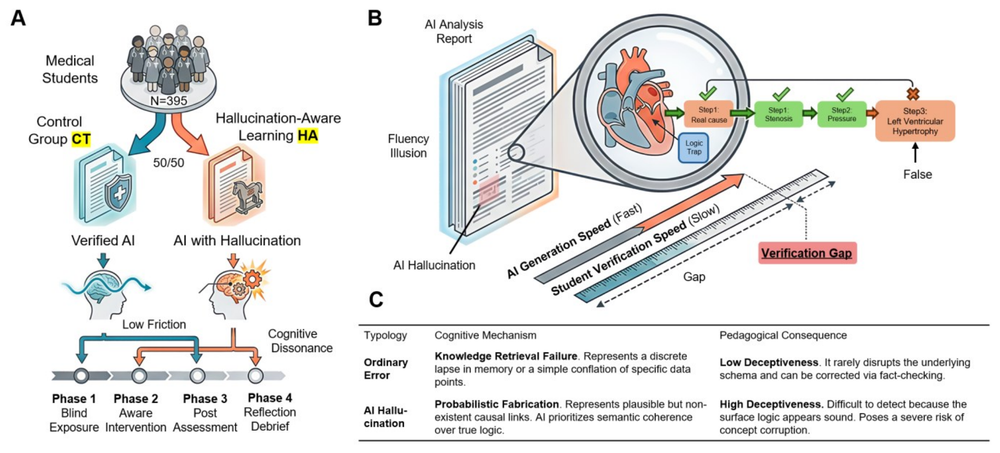
@article{yang2026hallucination,title={The Impact of Hallucination-Aware Learning on Metacognition and the AI Verification Gap in Medical Education},author={Yang, Luming and Jia, Rong and Li, Siqing and Xiao, Yue and Lu, Li},journal={OSF Preprints},year={2026},month=jun,doi={10.35542/osf.io/nh3d8_v1},url={https://osf.io/nh3d8_v1},}
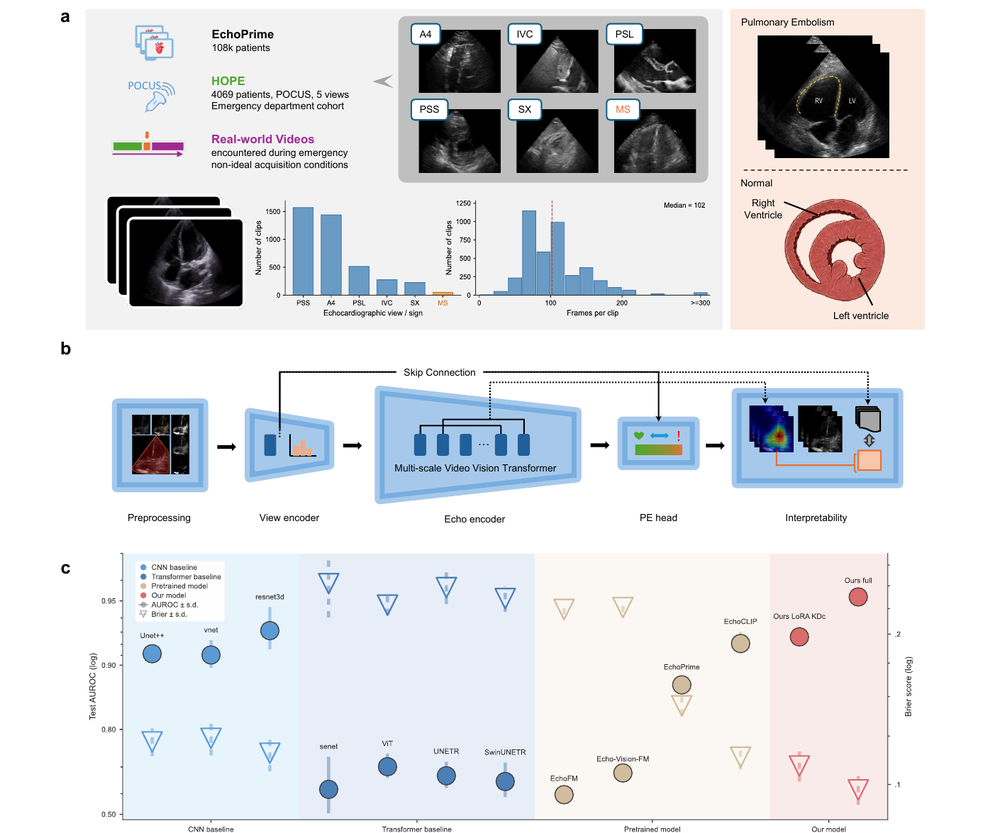
Pulmonary embolism (PE) is a time-sensitive medical emergency in which rapid recognition of right ventricular (RV) dysfunction by point-of-care ultrasound (POCUS) can support early risk stratification. Here, we present HOPE (ecHO-Pulmonary Embolism), a real-world emergency cardiac POCUS video dataset comprising 4,069 patients with suspected PE, and EchoPE, a foundation-model-based video classification framework for detecting PE-associated right-heart phenotypes. HOPE includes five commonly acquired emergency echocardiographic views, with all positive PE cases confirmed by computed tomography pulmonary angiography. EchoPE builds on EchoPrime-pretrained echocardiographic representations and incorporates view recognition, task-specific adaptation, and attention-based interpretability. Experiments suggested that directly transferring EchoPrime representations to this disease-specific task provided limited performance, whereas EchoPE (AUROC 95.2 ± 0.3) substantially outperformed both EchoPrime with a classification head (AUROC 87.6 ± 1) and conventional video deep learning baselines. At a fixed sensitivity of 90%, EchoPE achieved a precision of 87.8, compared with 70.7 for EchoPrime. Among adaptation strategies, Low-Rank Adaptation combined with knowledge distillation provided the best balance between PE discrimination and preservation of pretrained echocardiographic semantics. Interpretability analyses showed that the adapted model focused on clinically relevant RV morphological changes, interventricular septal configuration, and informative temporal segments within ultrasound videos. Overall, HOPE and EchoPE demonstrate that echocardiographic foundation models require dataset-specific adaptation to identify PE-related right-heart strain and support the potential use of artificial intelligence-assisted bedside echocardiography for risk warning in acute care settings.
@article{yang2026echope,title={Adapting Echocardiographic Foundation Models for Detecting Pulmonary Embolism-Related Right-Heart Strain},author={Yang, Luming and Ozkut, Yasemin and Bu, Zhenyu and Li, Siqing and Yu, Chang and Situ-LaCasse, Elaine and Acuña, Josie and Yarnish, Adrienne and Demant, Martin and Adhikari, Srikar R. and Yilmaz, Alper},journal={medRxiv preprint},year={2026},month=nov,doi={10.64898/2026.11.20.26368600},url={https://www.medrxiv.org/content/10.64898/2026.11.20.26368600v1},}
2026
AAAI’26
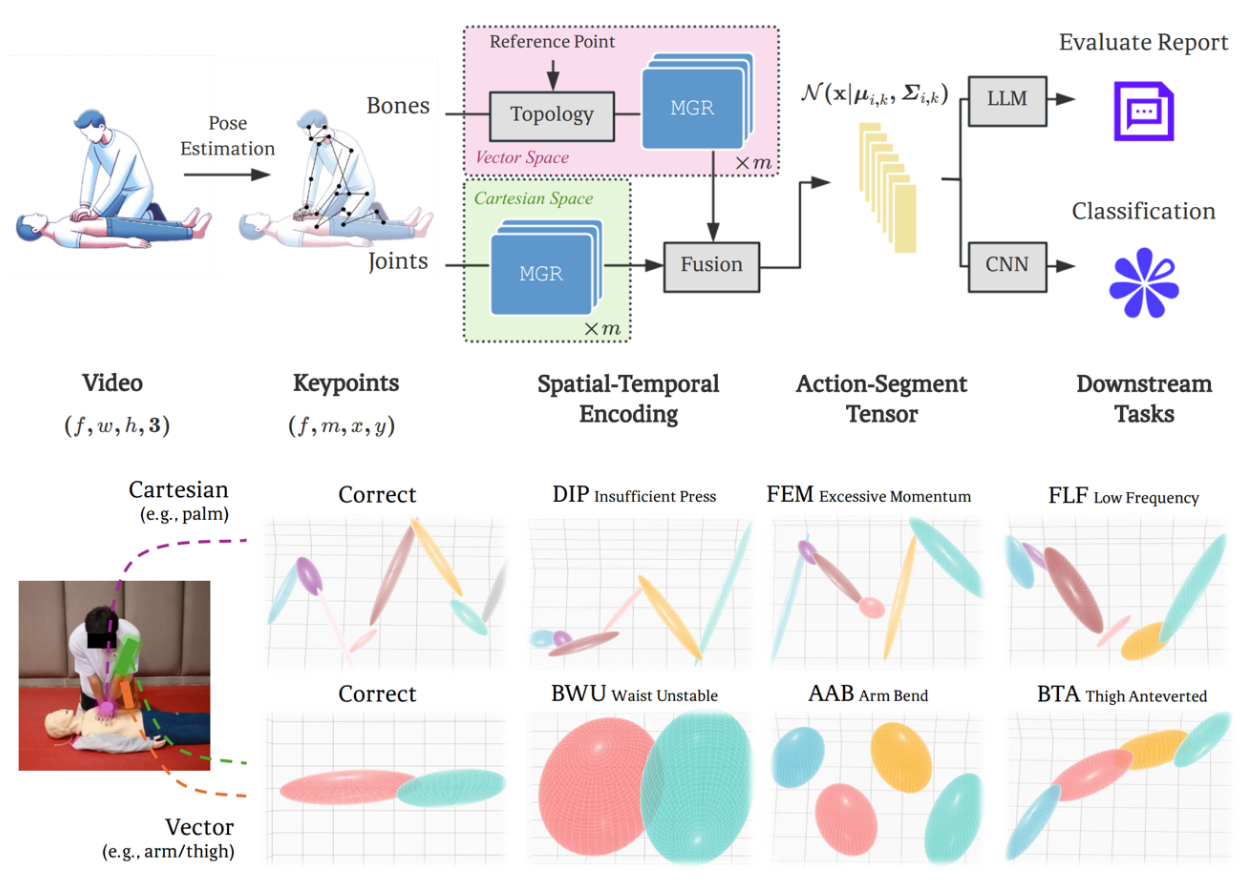
Multivariate Gaussian Representation Learning for Medical Action Evaluation
Luming Yang*, Haoxian Liu*, Siqing Li, and Alper Yilmaz†
In Proceedings of the AAAI Conference on Artificial IntelligenceAR: 24.1%, 2026
@inproceedings{yang2026gaussmedact,title={Multivariate Gaussian Representation Learning for Medical Action Evaluation},author={Yang, Luming and Liu, Haoxian and Li, Siqing and Yilmaz, Alper},booktitle={Proceedings of the AAAI Conference on Artificial Intelligence},volume={40},number={46},pages={39513--39521},year={2026},doi={10.1609/aaai.v40i46.41302},url={https://doi.org/10.1609/aaai.v40i46.41302},}
Nat. Commun.
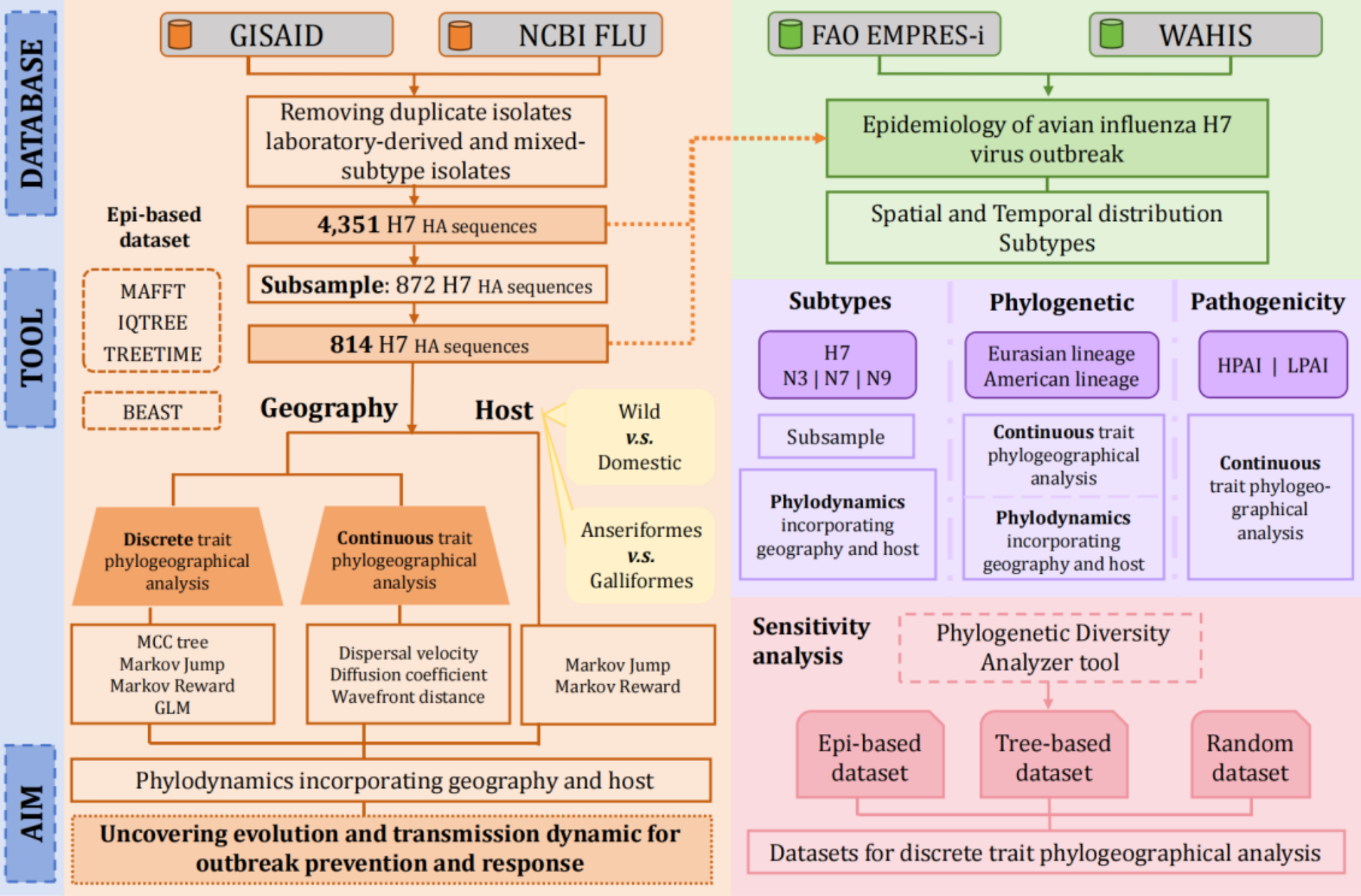
Disentangling the drivers and host-mediated global spread of H7 influenza A virus
Rongrong Qu*, Luming Yang*, Siqing Li, Can Chen, and 12 more authors
@article{qu2026h7virus,title={Disentangling the drivers and host-mediated global spread of H7 influenza A virus},author={Qu, Rongrong and Yang, Luming and Li, Siqing and Chen, Can and Zhang, Huihui and Cao, Kexin and Zhou, Wenkai and Chen, Mengsha and Miao, Jiani and Qi, Jiaxing and Feng, Qianqian and Chen, Jiaxin and Dai, Anqi and Wu, Xiaoyue and Zhou, Jingtong and Yang, Shigui},journal={Nature Communications},year={2026},volume={17},number={1},pages={6076},doi={10.1038/s41467-026-72718-9},url={https://doi.org/10.1038/s41467-026-72718-9},}
npj Digit. Med.
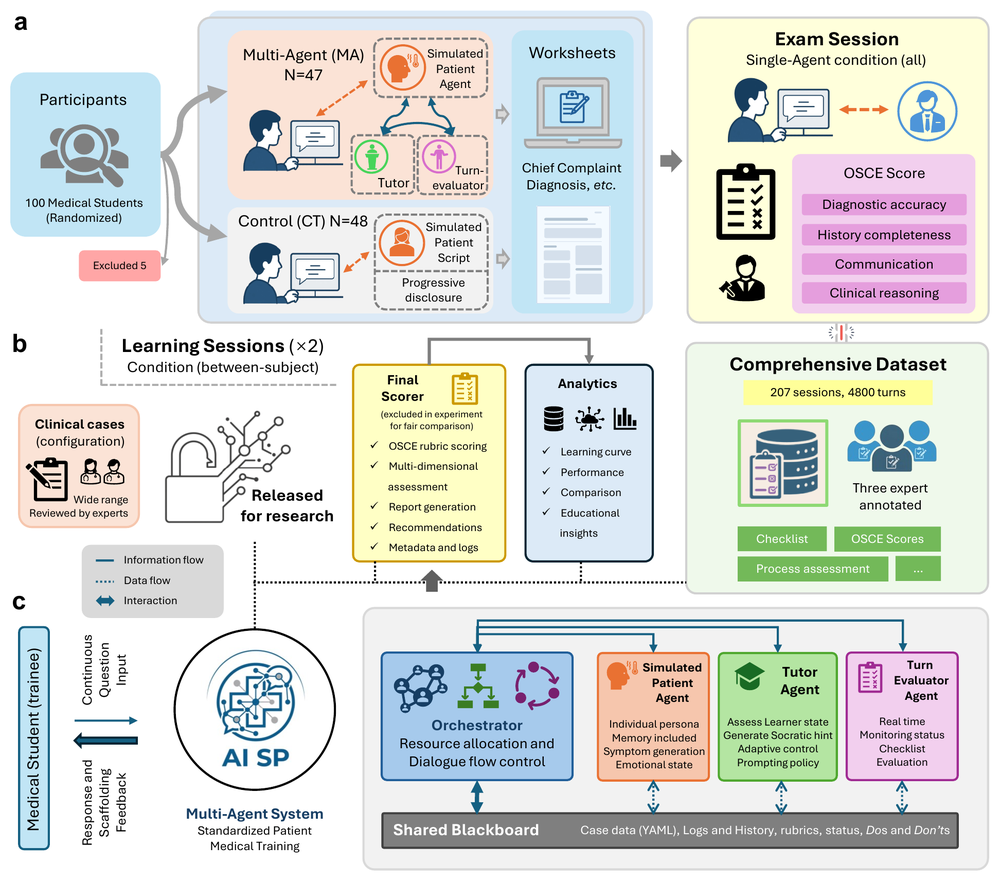
Evaluating Scaffolding-Oriented Multi-Agent Large Language Model System for Clinical Interview Training
Luming Yang, Haoxian Liu, Siqing Li, Rong Jia, and 3 more authors
npj Digital MedicineAccepted, not yet publishedIF 18, 2026
@article{yang2026evaluating,title={Evaluating Scaffolding-Oriented Multi-Agent Large Language Model System for Clinical Interview Training},author={Yang, Luming and Liu, Haoxian and Li, Siqing and Jia, Rong and Xiao, Yue and Chen, Guanhua and Lu, Li},journal={npj Digital Medicine},year={2026},}
2025
BIBM’25
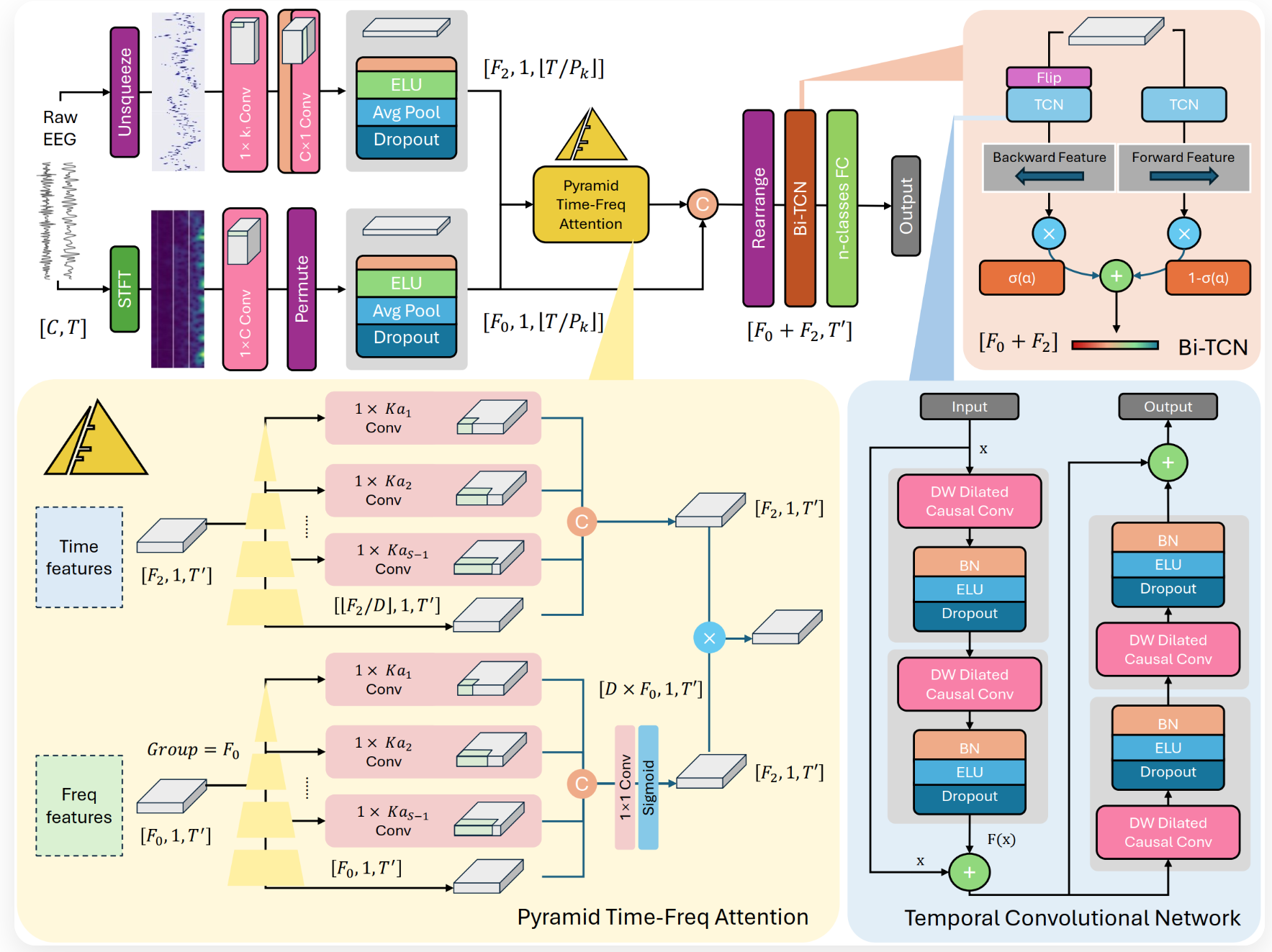
Bidirectional Time-Frequency Pyramid Network for Enhanced Robust EEG Classification
Jiahui Hong*, Siqing Li*, Muqing Jian, and Luming Yang†
In 2025 IEEE International Conference on Bioinformatics and Biomedicine (BIBM)Oral, AR: 19.6%, 2025
@inproceedings{hong2025biteeeg,title={Bidirectional Time-Frequency Pyramid Network for Enhanced Robust EEG Classification},author={Hong, Jiahui and Li, Siqing and Jian, Muqing and Yang, Luming},booktitle={2025 IEEE International Conference on Bioinformatics and Biomedicine (BIBM)},year={2025},pages={2225--2232},doi={10.1109/BIBM66473.2025.11357122},url={https://doi.org/10.1109/BIBM66473.2025.11357122},organization={IEEE},}
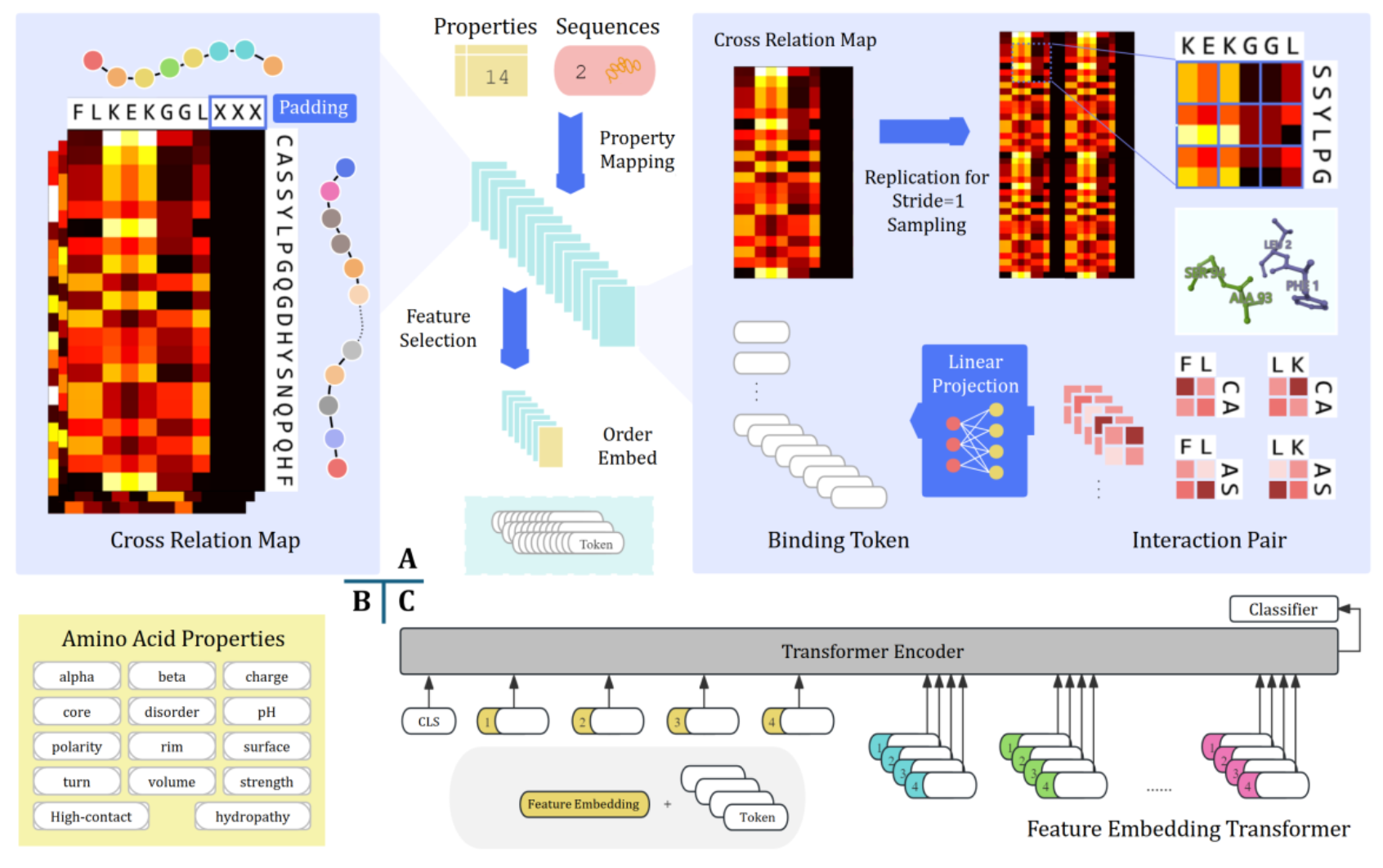
@article{yang2025disrupting,title={Disrupting explicit encoding paradigms: property-interactive transformers decode T-cell receptor specificity beyond dataset biases},author={Yang, Luming and Liu, Haoxian and Calanche, Alec and Gokcek, Sohret M. and Singh, Vishal and Sansoterra, Nicholas and Akkaya, Munir and Akkaya, Billur and Yilmaz, Alper},journal={Briefings in Bioinformatics},volume={26},number={6},pages={bbaf609},year={2025},publisher={Oxford University Press},doi={10.1093/bib/bbaf609},url={https://doi.org/10.1093/bib/bbaf609},}
2024
GECCO’24
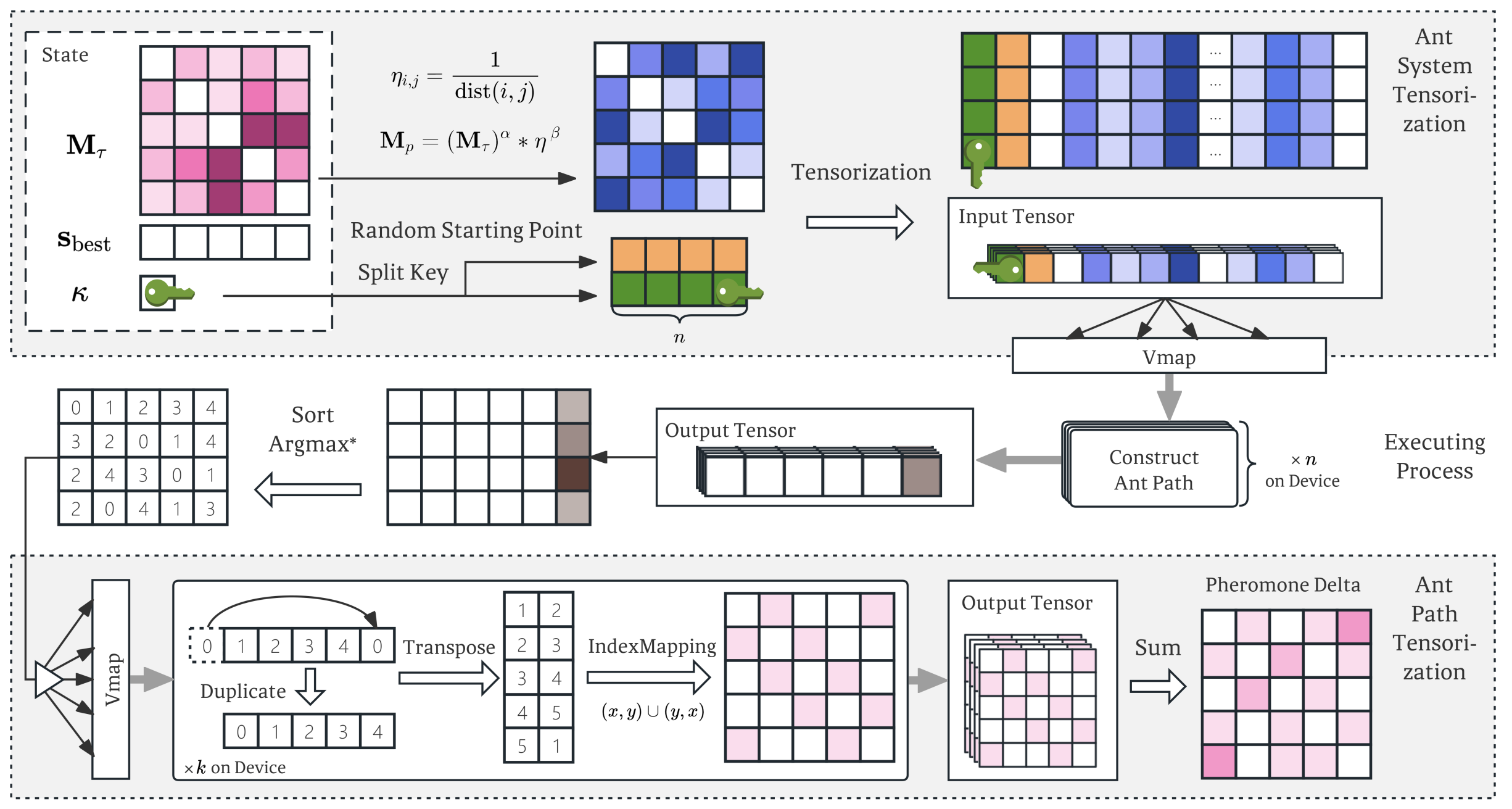
Tensorized ant colony optimization for GPU acceleration
Luming Yang, Tao Jiang, and Ran Cheng†
In Proceedings of the Genetic and Evolutionary Computation Conference Companion, 2024
@inproceedings{yang2024tensorized,title={Tensorized ant colony optimization for GPU acceleration},author={Yang, Luming and Jiang, Tao and Cheng, Ran},booktitle={Proceedings of the Genetic and Evolutionary Computation Conference Companion},pages={755--758},year={2024},doi={10.1145/3638530.3654394},url={https://doi.org/10.1145/3638530.3654394},}